Loader Img

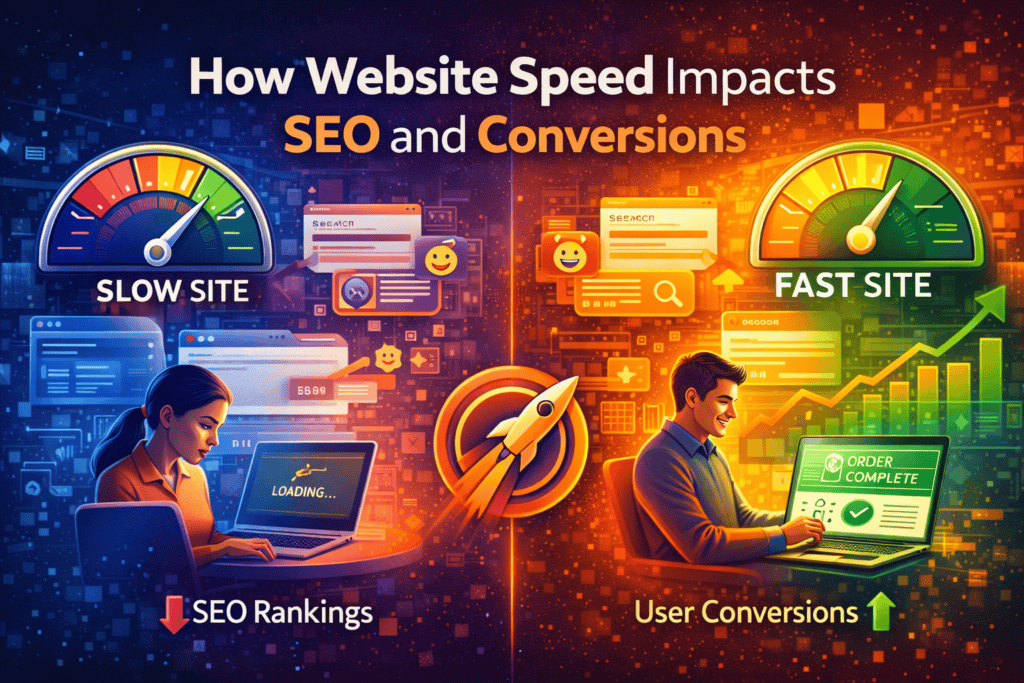
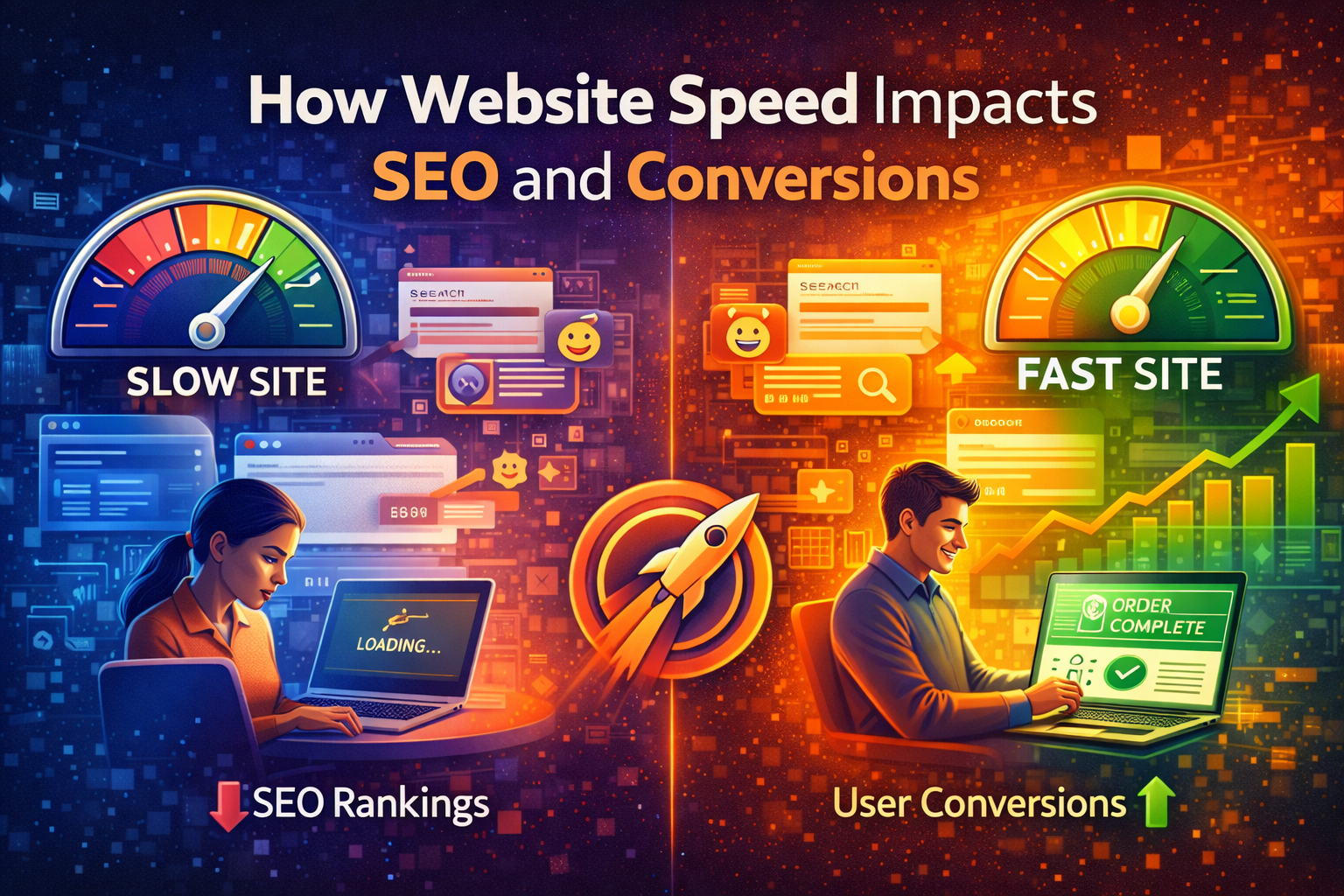
How Website Speed Impacts SEO and Conversions

How website speed impacts SEO rankings and user conversions

Website speed is no longer just a technical concern — it’s a core business factor. In 2026, how fast your website loads directly affects search rankings, user experience, and conversion rates. Slow websites lose traffic, rankings, and revenue, while fast websites gain trust, engagement, and sales.

In this blog, we’ll explain how website speed impacts SEO and conversions, why it matters more than ever, and what businesses should focus on.

In this blog, we’ll clearly explain on-page vs off-page SEO, how they differ, and what matters more in 2026.


Why Website Speed Matters More Than Ever

Why Website Speed Matters More Than Ever
Key user behavior stats (industry-wide trends):
  • Users abandon slow pages quickly
  • Faster websites keep users engaged longer
  • Speed directly affects trust and brand perception
Search engines recognize this behavior and reward fast websites accordingly.

How Website Speed Impacts SEO

1. Google Uses Speed as a Ranking Factor
Google has officially confirmed that page speed is a ranking signal for both desktop and mobile searches. Faster websites are easier to crawl, index, and rank.
2. Core Web Vitals and SEO
Google’s Core Web Vitals measure real user experience:
  • LCP (Largest Contentful Paint): How fast main content loads
  • CLS (Cumulative Layout Shift): Visual stability
  • INP (Interaction to Next Paint): Responsiveness
Poor speed scores hurt rankings, even if your content is good.
3. Mobile-First Indexing
With mobile-first indexing, Google evaluates your mobile site speed first. Slow mobile performance can significantly reduce visibility.

How Website Speed Impacts Conversions

1. Faster Websites Convert Better

Speed directly influences buying decisions. Even a small delay can reduce conversions.


Why speed boosts conversions:

  • Faster checkout experience
  • Better user flow
  • Reduced bounce rates
  • Higher trust levels
2. User Experience & Engagement

Fast websites:

  • Keep users longer
  • Increase page views
  • Improve form submissions
  • Reduce frustration

Slow websites push users away — often straight to competitors.

Common Causes of Slow Websites
  • Heavy images and videos
  • Unoptimized CSS & JavaScript
  • Too many plugins
  • Poor hosting
  • No caching or CDN
  • Bloated page builders
Identifying and fixing these issues can deliver immediate improvements.

How to Improve Website Speed

Optimize Images
Compress images and use modern formats like WebP.
Use Caching & CDN
Caching and content delivery networks reduce load time globally.
Reduce Scripts
Minimize JavaScript, CSS, and third-party scripts.
Choose Quality Hosting

Good hosting directly affects speed and stability.

Optimize Core Web Vitals
Focus on LCP, CLS, and INP improvements.

Final Thoughts

In 2026, website speed is a competitive advantage. It improves SEO, boosts conversions, and strengthens brand credibility. A fast website doesn’t just rank better — it performs better.

At Trend Web Technologies, we build high-performance, SEO-optimized websites that load fast and convert visitors into customers.
Still Have Questions?

Website speed is a ranking factor because search engines prioritize fast, user-friendly websites. Faster pages improve crawl efficiency, reduce bounce rates, and align with Core Web Vitals, which directly influence search rankings.
A slow website frustrates users and increases drop-offs. Faster websites keep visitors engaged, improve user experience, and lead to higher conversion rates, whether it’s form submissions, sign-ups, or online purchases.
Ideally, a website should load within 2–3 seconds. Pages that take longer are more likely to lose visitors, negatively impacting both SEO performance and conversions.
Website speed can be improved by optimizing images, using caching, minimizing CSS and JavaScript files, choosing reliable hosting, and reducing unnecessary plugins or scripts.

Contact Us