
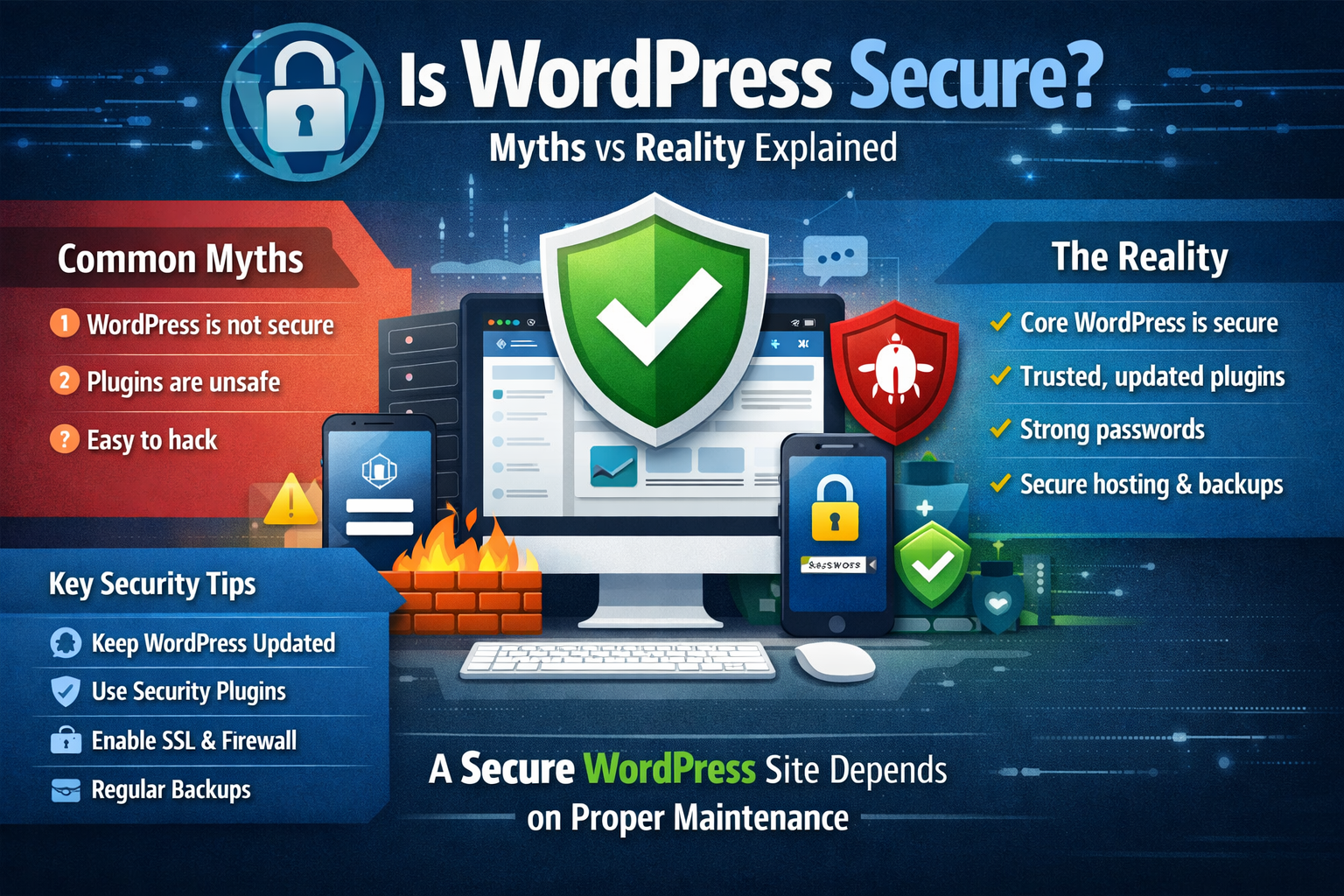
Is WordPress Secure? Myths vs Reality Explained
Myth 1: WordPress Is Not Secure
The WordPress core software is developed and maintained by a global community of developers and security experts. It receives regular updates, security patches, and improvements. The core platform follows strong coding and security standards.
Myth 2: WordPress Websites Get Hacked Easily
- Outdated themes or plugins
- Weak passwords
- Weak passwords
- Lack of basic security practices
Myth 3: Plugins Make WordPress Unsafe
- Plugins are outdated
- Plugins are downloaded from untrusted sources
- Too many unnecessary plugins are installed
Myth 4: WordPress Is Not Suitable for Business or Enterprise Use
Reality: WordPress is used by large businesses and high-traffic websites.
Many well-known brands, media companies, and enterprises rely on WordPress. With the right hosting, security configuration, and maintenance strategy, WordPress can handle complex, high-traffic websites securely.
Security depends on how WordPress is managed, not on the platform itself.
What Actually Causes WordPress Security Issues?
Most WordPress security problems are caused by:
- Ignoring updates
- Using weak login credentials
- Poor-quality hosting
- Installing nulled or pirated themes/plugins
- Lack of backups and monitoring
These issues are preventable with proper setup and ongoing care.
How Secure Is WordPress When Properly Maintained?
A well-maintained WordPress website includes:
- Regular core, theme, and plugin updates
- Strong passwords and user role management
- SSL certificates (HTTPS)
Firewalls and malware scanning
- Secure hosting and backups
When these practices are followed, WordPress is a highly secure CMS suitable for long-term use.
Best Practices to Improve WordPress Security
- Always update WordPress, themes, and plugins
- Use strong passwords and limit admin access
- Install trusted security plugins
-
Choose reliable, security-focused hosting
- Schedule regular backups
Final Thoughts
WordPress security myths often come from misunderstandings and poor website management. The truth is, WordPress is a secure platform when properly configured and maintained. Like any CMS, its safety depends on best practices, regular updates, and responsible usage.
At Trend Web Technologies, we help businesses stay ahead by building secure, high-performance WordPress websites and adopting future-ready digital solutions that drive real results.
Still Have Questions?
Yes, WordPress is secure by default. The WordPress core follows strong security standards and receives regular updates. Security issues usually arise from outdated plugins, weak passwords, or poor hosting—not from WordPress itself.
WordPress is the most widely used CMS, which makes it a common target for attacks. Most reported security problems are caused by poor site maintenance, untrusted plugins, or lack of updates rather than flaws in WordPress core.
Plugins themselves are not unsafe if they come from trusted sources and are regularly updated. Security risks occur when outdated, nulled, or poorly coded plugins are used without proper maintenance.
You can improve WordPress security by keeping WordPress and plugins updated, using strong passwords, enabling SSL, installing trusted security plugins, choosing reliable hosting, and taking regular backups.