
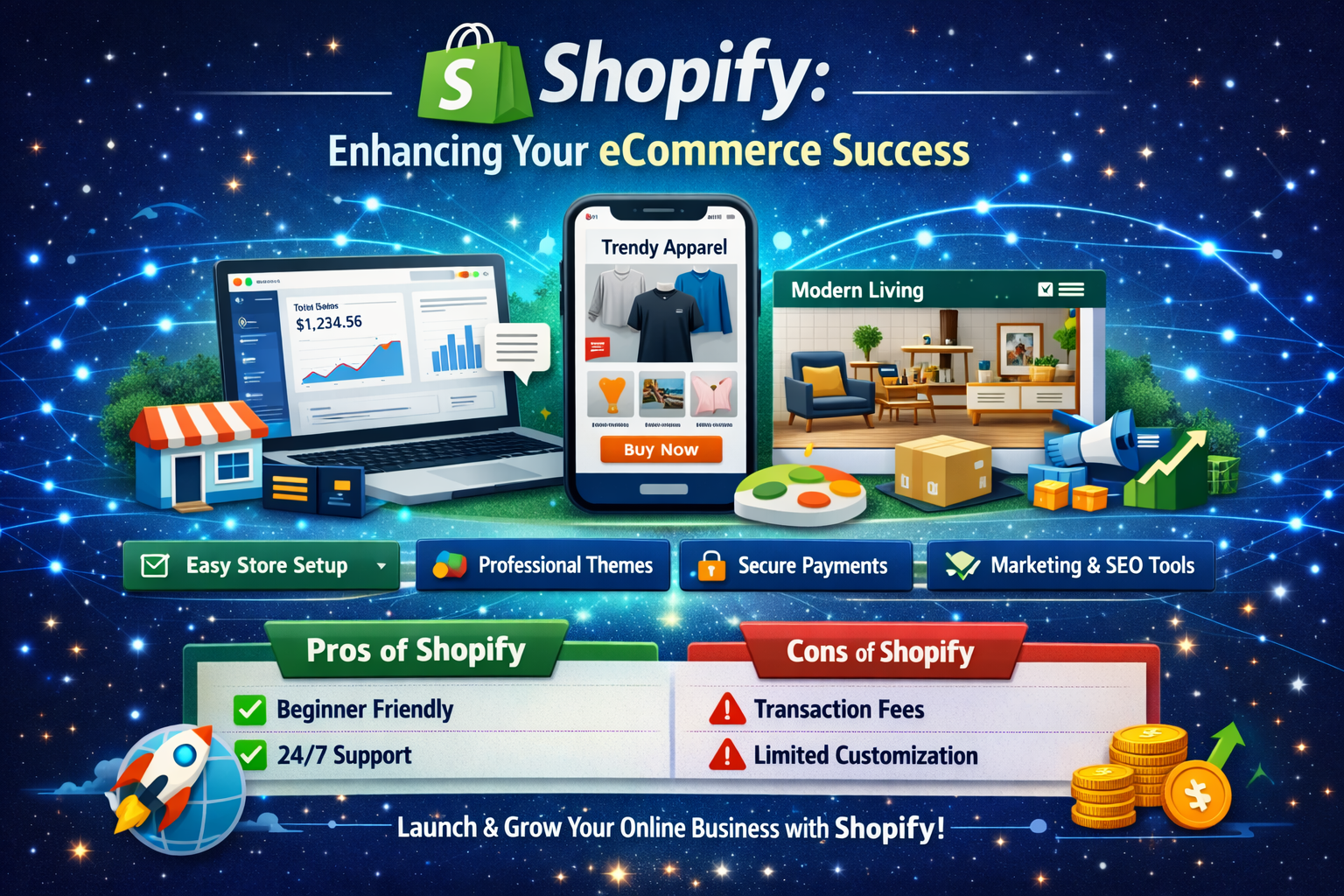
If you’re planning to launch an online store without getting into heavy technical work, Shopify is one of the most powerful and beginner-friendly eCommerce platforms available today. From startups to global brands, Shopify helps businesses sell products online, manage inventory, accept payments, and scale with ease.
In this guide, we’ll break down what Shopify is, how it works, its key features, pros and cons, pricing, and whether it’s the right choice for your business.
What Is Shopify?
Shopify is a hosted eCommerce platform that allows anyone to create and run an online store without needing advanced coding skills. It provides everything you need in one place—hosting, security, store management, payments, and integrations.
Whether you sell physical products, digital downloads, subscriptions, or services, Shopify offers tools to manage the entire selling process from a single dashboard.
How Does Shopify Work?
Shopify works on a Software-as-a-Service (SaaS) model. Instead of installing software on your server, you subscribe to a plan and access Shopify through your browser.
Basic workflow:
- Sign up for a Shopify account
- Choose a theme and customize your store
- Add products, prices, and images
- Set up payments, shipping, and taxes
- Launch your store and start selling
Shopify takes care of hosting, updates, backups, and security—so you can focus on growing your business.
Key Features of Shopify
🛍️ Easy Store Setup
Shopify’s interface is clean and intuitive. You can launch a professional-looking store in hours, not weeks.
🎨 Professional Themes
Choose from free and premium themes that are mobile-responsive and optimized for conversions.
💳 Secure Payment Gateway
Shopify supports multiple payment options including cards, UPI, wallets, PayPal, Stripe, and more.
📦 Inventory & Order Management
Track stock levels, manage orders, automate emails, and handle returns—all from one dashboard.
📈 Marketing & SEO Tools
Built-in SEO features, discount codes, abandoned cart recovery, email marketing, and analytics help boost sales.
🔌 App Ecosystem
Thousands of apps for marketing, shipping, automation, CRM, reviews, and advanced reporting.
Shopify Pricing Plans (Overview)
Shopify offers flexible pricing based on business size:
- Basic Shopify – Ideal for new stores
- Shopify – For growing businesses
- Advanced Shopify – For scaling brands with advanced reporting
- Shopify Plus – Enterprise-level solution for high-volume stores
👉 Pricing varies by region and features, but the cost includes hosting, security, and support.
Shopify vs WooCommerce (Quick Comparison)
Features • Hosting • Maintenance • Best Use| Feature | Shopify | WooCommerce |
|---|---|---|
| Feature Hosting | ShopifyIncluded | WooCommerceSelf-hosted |
| Feature Ease of Use | ShopifyVery Easy | WooCommerceModerate |
| Feature Customization | ShopifyLimited (Apps) | WooCommerceVery High |
| Feature Maintenance | ShopifyShopify handles it | WooCommerceYou manage it |
| Feature Best For | ShopifyQuick, scalable stores | WooCommerceFull control users |
Who Should Use Shopify?
Shopify is perfect for:
- Startups & small businesses
- Dropshipping stores
- D2C brands
- International sellers
- Non-technical entrepreneurs
If you want a reliable, scalable, and low-maintenance eCommerce solution, Shopify is a strong choice.
Final Thoughts
Shopify simplifies eCommerce by removing technical barriers and providing a complete, secure selling platform. While it may not offer the same level of customization as open-source solutions, its ease of use, performance, and ecosystem make it one of the best platforms for online selling today.
At Trend Web Technologies, we help businesses choose the right eCommerce platform by combining technical expertise with real-world experience
Still Have Questions?
Shopify is a fully hosted eCommerce platform that allows businesses to create, manage, and scale online stores without worrying about hosting, security, or technical maintenance. Everything is managed from a single dashboard.
Shopify is better for users who want a quick, easy, and low-maintenance solution, while WooCommerce is ideal for users who want full customization and control. The right choice depends on your technical skills and business goals.
No. Shopify is designed for beginners and non-technical users. You can launch a store, add products, and accept payments without writing any code.
Yes. Shopify includes hosting, SSL security, backups, and performance optimization as part of its subscription, so you don’t need to manage servers or updates.