
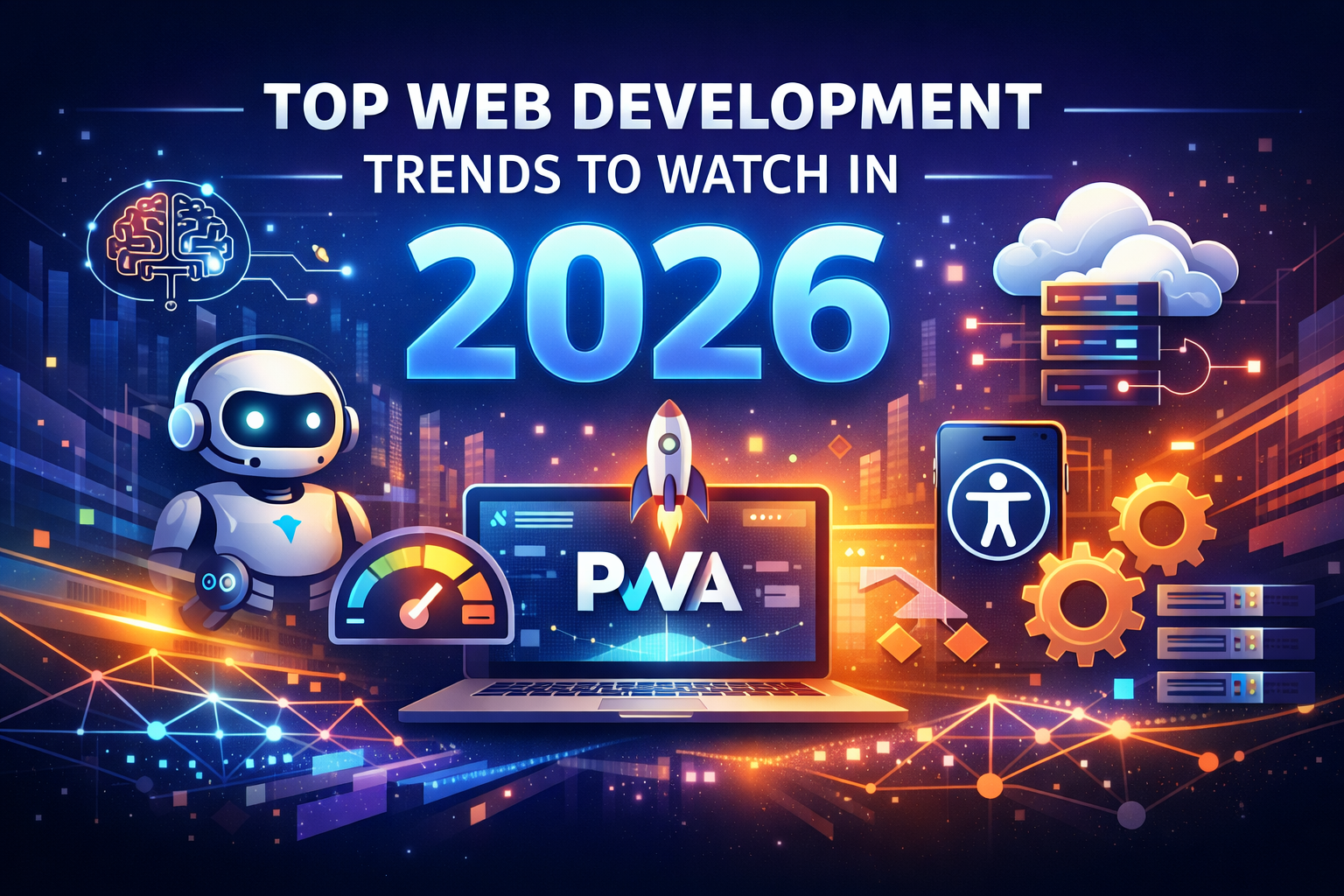
The web development industry is evolving faster than ever. With rapid advancements in AI, performance optimization, and user-centric design, businesses must stay ahead to remain competitive online. In 2026, web development is no longer just about building websites — it’s about creating fast, intelligent, scalable, and accessible digital experiences.
In this blog, we’ll explore the top web development trends for 2026 that businesses, startups, and developers should focus on to build future-ready websites and applications.
1. Artificial Intelligence (AI) in Web Development
AI is transforming how websites are built and maintained. From AI-powered chatbots and smart search features to automated testing and code generation, developers are using AI to speed up development and improve user experience.
In 2026, AI will play a key role in:
- Personalizing website content based on user behavior
- Improving customer support with AI chatbots
- Enhancing UI/UX through predictive design patterns
- Automating repetitive development tasks
Businesses adopting AI-driven web solutions will gain a strong competitive advantage.
2. Progressive Web Apps (PWAs)
Progressive Web Apps continue to grow in popularity as they combine the best of websites and mobile apps. PWAs load faster, work offline, and provide a smooth, app-like experience without requiring users to download anything from an app store.
Key benefits of PWAs include:
- Faster loading times
- Offline functionality
- Improved mobile performance
- Higher user engagement and conversions
In 2026, PWAs will become a standard choice for businesses targeting mobile-first audiences.
3. Performance-First Development
Website speed is no longer optional — it directly impacts SEO, user experience, and conversions. Google continues to prioritize fast websites, and users expect instant loading.
Modern performance-focused techniques include:
- Core Web Vitals optimization
- Lazy loading images and videos
- Optimized JavaScript and CSS
- Server-side rendering and caching
Websites built with performance in mind will rank higher and retain more users.
4. Accessibility and Inclusive Design
Web accessibility is becoming a critical requirement rather than an afterthought. In 2026, accessible websites will be essential for legal compliance, better SEO, and inclusive user experiences.
Accessibility best practices include:
- Proper heading structure
- Keyboard navigation support
- Screen reader compatibility
- High contrast and readable fonts
Inclusive design ensures your website is usable by everyone, including people with disabilities.
5. Serverless Architecture and Cloud-Based Development
Serverless development allows businesses to scale efficiently without managing traditional servers. Developers can focus on building features while cloud providers handle infrastructure, security, and scalability.
Advantages of serverless architecture:
- Lower operational costs
- Automatic scalability
- Faster deployment
- Improved reliability
In 2026, more web applications will rely on serverless and cloud-native solutions.
Final Thoughts
The future of web development is smart, fast, and user-focused. Businesses that adapt to these trends will not only improve their online presence but also gain long-term growth and scalability.
At Trend Web Technologies, we specialize in building modern, high-performance websites using the latest web development trends. Whether you need a custom website, web application, or performance optimization, our team is ready to help you stay ahead in 2026 and beyond.
Ready to future-proof your website? Get in touch with Trend Web Technologies today. 🚀
At Trend Web Technologies, we help businesses apply the latest 2026 web development trends to build fast, scalable, and user-focused digital experiences that drive long-term growth.
Still Have Questions?
In 2026, key web development trends include AI-powered features, progressive web apps (PWAs), serverless architecture, Web3 and blockchain integration, Jamstack, and motion UI for better engagement.
Yes. AI will play a big role in web development by helping with code generation, automatic testing, performance optimization, and personalizing user experiences.
Yes. Progressive Web Apps remain important because they deliver fast performance, offline access, and app-like experiences without needing app stores—especially beneficial for mobile users.
Serverless architecture lets developers build and scale websites without managing servers. It reduces infrastructure cost, improves performance, and speeds up deployment.