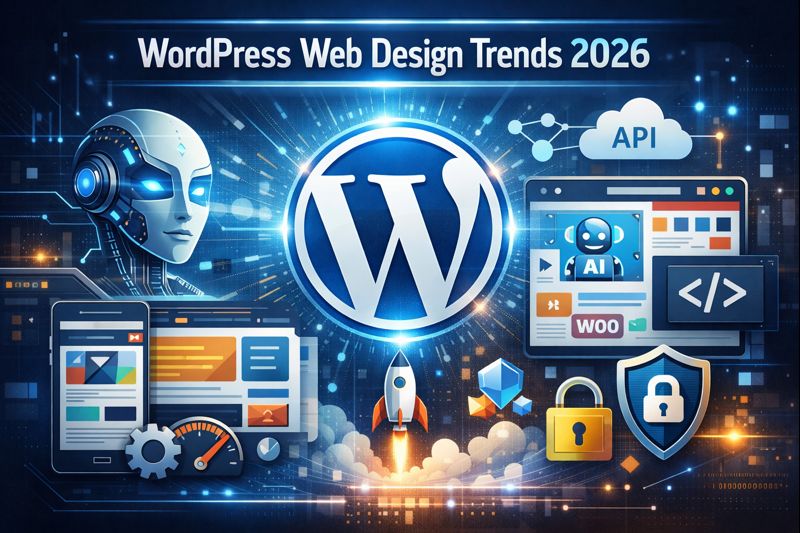
WordPress remains the world’s most popular content management system (CMS), powering over 43% of websites worldwide. It’s flexible, scalable, and constantly evolving, making it the go-to choice for businesses, blogs, and eCommerce stores.
In 2026, WordPress is set to become smarter and more efficient than ever. With innovations like AI integrations, advanced page builders, mobile-first design, and headless CMS technology, WordPress is redefining how websites are designed, developed, and maintained.
In this blog, we’ll explore the top WordPress trends for 2026 that every business, developer, and designer should know to stay ahead.
Artificial Intelligence is transforming the web design industry by automating tasks, improving user experience, and helping businesses achieve higher conversions. From smart layouts to personalized content, AI is redefining how modern websites are designed and developed.
In this blog, we’ll explore what AI web design is, how it works, its benefits, and why your business needs an AI-powered website in 2026.
1. AI-Powered WordPress Websites
AI-powered WordPress websites can:
Automatically suggest layouts, colors, and fonts based on industry best practices
Generate SEO-friendly content for pages and blogs
Personalize the user experience by showing dynamic content based on visitor behavior
With AI, designers can focus on creativity while the AI handles repetitive tasks, analytics, and optimization. This results in high-performing, conversion-focused websites that work smarter for your business.
2. Mobile-First and Responsive Design
Mobile usage continues to dominate the web, making mobile-first design a necessity. Google’s algorithms prioritize mobile-friendly websites, meaning your WordPress site must perform seamlessly on smartphones and tablets.
Key mobile-first trends include:
- Optimized mobile layouts for faster navigation
- Touch-friendly buttons and menus
- AMP (Accelerated Mobile Pages) integration for speed
Lazy-loading images to reduce load times
A mobile-first website ensures a better user experience, lower bounce rates, and higher search rankings.
3. Advanced Page Builders
Modern WordPress page builders like Elementor, Divi, and Gutenberg have evolved significantly. In 2026, these tools are becoming more AI-assisted, intuitive, and conversion-focused.
Features designers are adopting:
- Drag-and-drop AI-powered widgets
- Prebuilt, optimized templates for niche industries
- Seamless WooCommerce integration for online stores
- Built-in SEO and speed optimization tools
These builders empower non-technical users to create professional websites while saving time for developers.
4. Headless WordPress & APIs
Headless WordPress separates the front-end (what users see) from the back-end (content management). Using frameworks like React, Vue, or Next.js, developers can build ultra-fast, scalable, and dynamic websites.
Benefits of headless WordPress include:
- Faster page loads and smoother UX
- Flexibility in design and functionality
- Easier integration with third-party apps, APIs, and mobile apps
In 2026, headless WordPress is expected to be a go-to solution for enterprise-level websites.
5. Enhanced Security & Privacy
As cyber threats grow, WordPress security remains a top priority. In 2026, websites will increasingly use:
- AI-driven firewalls and malware detection
- Two-factor authentication (2FA) for admin accounts
- GDPR and CCPA compliance for data privacy
- Regular plugin and theme security audits
A secure WordPress site not only protects your business but also builds trust with users and customers.
6. Performance Optimization
Website speed is critical for user experience and SEO. AI tools, caching plugins, and lightweight themes can help WordPress websites achieve blazing-fast load times.
Best practices for 2026:
- Image optimization and lazy loading
- Minifying CSS, JS, and HTML
- Content Delivery Network (CDN) integration
- AI-powered performance monitoring to automatically identify bottlenecks
A fast website reduces bounce rates and improves conversion rates, making performance optimization non-negotiable.
7. Voice Search and AI Chatbots
Voice search and conversational AI are becoming mainstream. Websites optimized for voice queries and equipped with AI chatbots can significantly improve engagement and customer satisfaction.
Best practices for 2026:
- AI chatbots handle customer queries 24/7
- Voice search optimization increases visibility in search engines
- Integration with WooCommerce and service pages boosts conversions
Businesses using AI chatbots and voice search-friendly WordPress sites stay ahead of competitors.
8. Personalized Content and UX
In 2026, personalization is key. AI tools analyze visitor behavior and provide:
- Custom product recommendations
- Tailored blog content
- Dynamic landing pages based on user interests
This hyper-personalization improves user engagement, increases conversions, and ensures visitors have a meaningful experience.
Final Thought
WordPress in 2026 is more powerful, faster, and smarter than ever. By leveraging AI, advanced page builders, headless technology, and mobile-first design, businesses can build websites that are:
- High-performing
- SEO-friendly
- User-focused
- Secure and scalable
Adopting these WordPress trends now will give your business a competitive edge in the digital landscape.
At Trend Web Technologies, we help businesses turn these 2026 WordPress trends into real results—building AI-powered, high-performance, and future-ready websites that grow with your business, not against it.
Still Have Questions?
In 2026, top WordPress design trends include minimal layouts, dark mode support, dynamic animations, AI-driven personalization, and immersive micro-interactions that improve engagement.
Yes. AI design assistants and AI-generated content layouts will help speed up design workflows, personalize user experiences, and optimize page elements for conversion and SEO.
Absolutely. Fast-loading themes, accessible layouts, clean code, and mobile-friendly designs will remain essential for better UX, higher rankings, and wider audience reach.
If your current site feels outdated, slower than competitors, or doesn’t support mobile or accessibility standards, redesigning with 2026 trends can boost engagement, SEO, and conversions.